← All writing

Conversion
Healthcare
12 of 13 healthcare-AI sites are silent about AI hallucinations
What happens when the AI is wrong. I audited 13 ambient-scribe and intake sites in June. Twelve stay silent, and the only answer on the market didn't survive six weeks.
Jul 2026
/
4 min read
By Dmitry Chernov / Web & Product Architect
Where this pattern surfaced
Right now I'm working with several medtech and healthcare-tech projects. Before I touch anything in a product, I go deep into the market, and part of that work is deep audits of competitor websites. Every pass surfaces something nobody planned to show me. This time it was 13 healthcare-AI sites, the full ambient-scribe and intake-automation cluster, audited in June 2026.
The cost of a wrong answer
In healthcare automation the stakes of a wrong answer are not cosmetic. A hallucinated line in a patient summary becomes part of the chart. A misread lab report routes the patient to the wrong specialist. A wrong condition pulled from a referral changes what the treating physician sees before the visit. This is why accuracy is the first thing the buyer needs to verify, and the last thing these websites talk about.
A practice administrator shortlists three AI scribes for a specialty clinic. Before anyone books a demo, the physician owner asks the only question he actually cares about: what happens when it makes something up? She opens all three vendor websites to find out. There is no answer. Not a page, not a paragraph, not a line in the FAQ.
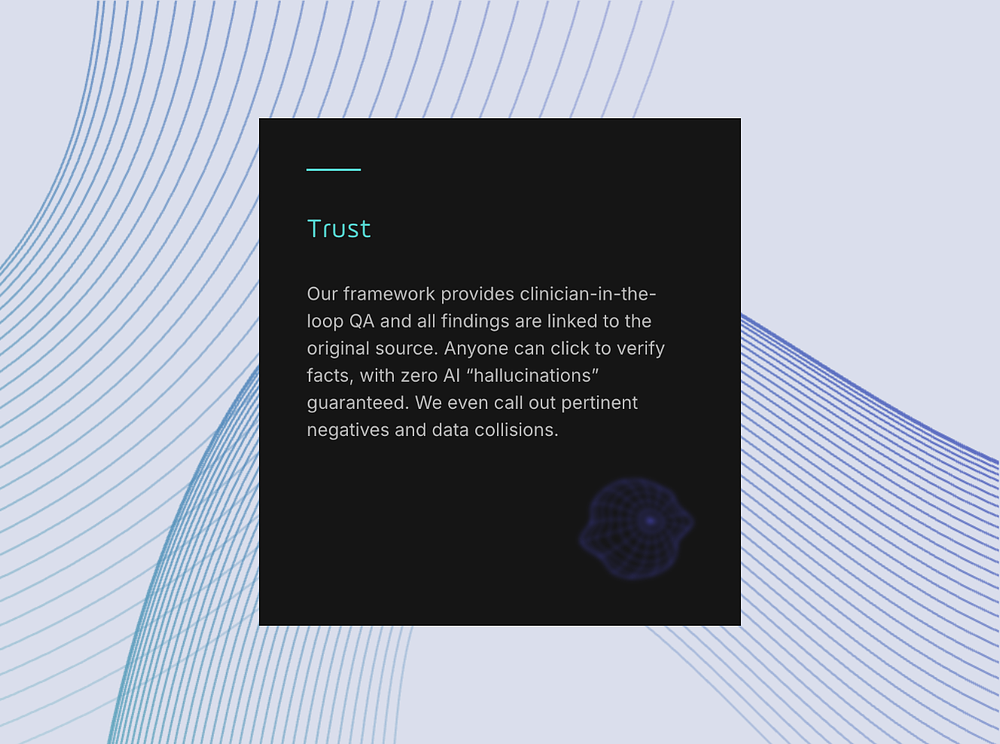
Twelve of the 13 sites never mention AI errors anywhere. The thirteenth ran a homepage guarantee of zero AI hallucinations with nothing published behind it. Six weeks later, the claim was gone from the site.
What silence actually says
The buyer already knows generative AI makes things up. Her physician owner knows it, her malpractice insurer knows it, and the vendor knows it best of all. When the website says nothing, she doesn't conclude the problem is solved. She concludes the vendor would rather she didn't ask, and she fills the gap with the worst version she can imagine.
Silence doesn't read as confidence. It reads as avoidance, and avoidance costs money at the exact moment it matters. Twelve of the 13 sites push every safety question into a sales call, which means the call starts with an objection instead of a configuration. The deals that never book that call die without telling anyone why.
The one site that answered, and what happened next
Fourier Health was the exception. In the June audit its homepage and platform page carried the sharpest single claim in the category: "zero AI hallucinations guaranteed," paired with a citation-to-source mechanism described in prose. What the site didn't have was anything a buyer could check: no benchmark, no screenshot of the verification flow, and no named customers anywhere.
I re-checked the live site on 15 July 2026. The redesigned homepage no longer contains the word hallucination at all. In its place sits a published benchmark, "0.82+ F1 score, up to 30x higher performing than leading LLMs," and a customer strip with Mayo Clinic and Tennessee Oncology. The absolute claim is gone. Checkable proof took its seat.
What right looks like
Wrong is silence. Wrong is also a guarantee with nothing behind it, and the category's last six weeks demonstrate both. Right is boring and specific: name the question on your site, show the mechanism the clinician actually uses to verify output, publish the number, and date it.
Pieces of this already exist in the cluster. Abridge links a research write-up on hallucination elimination directly from its homepage, and Heidi states that its medical team reviews and refines model outputs (both verified 15 July 2026). But no site in the cluster holds all three together: the question named, the mechanism shown, the number published. The first one to do it owns the safety conversation in the category. An elevator doesn't promise it can't fall. It posts the inspection certificate inside the cab, and that certificate is why nobody hesitates before stepping in.
The question doesn't disappear
An unanswered objection doesn't wait politely on your website. It gets answered somewhere else: by a competitor who published the number, by a Reddit thread, by the buyer's own worst assumption. In 14 years I've watched the same rule hold across fintech, Web3, and now healthcare AI: the harder the question, the more expensive the silence. If you want a second opinion on how your site handles the questions buyers actually ask, I cover trust signals and objection coverage in website audits.
Key takeaway
The questions that decide the deal, including what happens when the AI is wrong, must be named and answered on your site.
SOURCES
WHEN THIS DOESN'T APPLY
Doesn't apply to products with no generative AI in the loop. The fix is also not a bolder promise: an absolute guarantee without a published mechanism is the failure mode this audit documents, not the escape from it.
By Dmitry Chernov /
Web & Product Architect
Web & Product Architect
I run fixed-scope website audits across 4 pillars (brand, UX, UI, conversion) for founders building AI/ML startups, B2B SaaS, Dev Tools, and Web3 products. 14 years in design. 170+ shipped, 20+ in Web3.
Available
/
UTC+4
/
03:15
Keep reading
Audit notes
Conversion
Web3
Your root domain is your front door. Don't aim it at your app.
Jun 2026
/
5 min read
.png)
Audit notes
Conversion
Fintech
Revolut became a UK bank. You can't tell from the homepage.
Jun 2026
/
4 min read
UX Patterns
Web3
Trust Signals
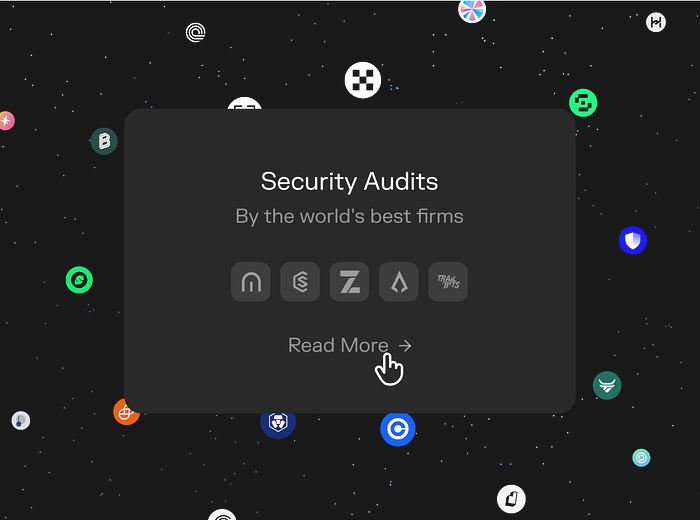
Let buyers verify your proofs. Don't just show logos.
Jun 2026
/
7 min read
Start with a 30-minute call.
Free intro call, no commitment. You'll leave with 2 – 3 specific observations about what's costing you conversion before we discuss the audit.
Dmitry Chernov
Web & Product Architect
AI, SaaS & Web3
© 2026 Dmitry Chernov. All rights reserved.